How Long Does Interior Design Take for 1BHK & 2BHK Homes? (2026 Guide)
One of the most common questions homeowners ask before starting interiors is:
“How many days will the complete interior work actually take?”
And honestly, most people get unrealistic answers.
Some are promised “full interiors in 30 days,” while others are told timelines without understanding what’s actually included.
In real projects across Navi Mumbai, the timeline depends less on labor speed and more on:
- planning quality
- design approvals
- material selection
- execution coordination
In compact 1BHK and 2BHK homes, even small delays can affect the entire workflow.
This guide explains realistic interior timelines, what causes delays, and how homeowners can avoid unnecessary execution problems.
Why Choosing the Right Interior Designer Matters
Interior Type |
1BHK Timeline |
2BHK Timeline |
|---|---|---|
| Modular Interiors | 30–45 Days | 45–60 Days |
| Hybrid Interiors | 45–60 Days | 60–75 Days |
| Full Turnkey Interiors | 60–75 Days | 75–120 Days |
Timelines vary depending on:
- ✔ customization level
- ✔ material availability
- ✔ society permissions
- ✔ design changes during execution
Projects with faster approvals and better planning usually finish much quicker.
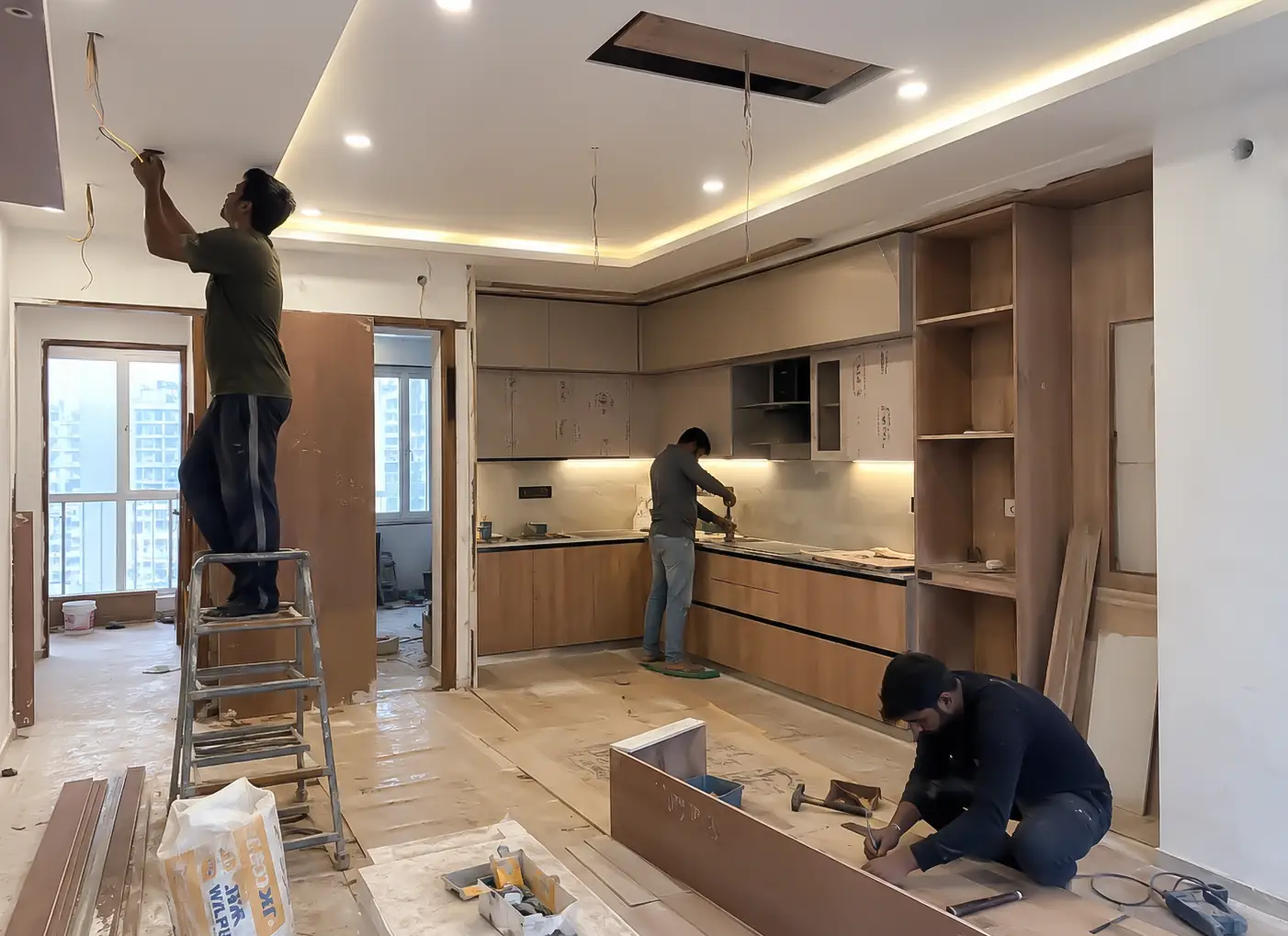
What Actually Takes Time in Interior Design?
Most homeowners think carpentry is the longest stage.
In reality, delays usually happen before execution starts properly.
1. Layout & Design Planning (7–15 Days)
This includes:
- furniture layout
- electrical planning
- storage planning
- 3D concepts
- material direction
Homes where layouts are finalized early usually face fewer execution delays later.
That’s why many homeowners first explore practical home design ideas for 1BHK & 2BHK homes before starting work.
2. Material Selection (5–10 Days)
This stage includes selecting:
- laminates
- handles
- lighting
- paint shades
- countertops
One of the biggest reasons projects slow down is constant material changes after execution starts.
3. Execution & Installation (20–60 Days)
This depends on whether the interiors are:
- modular
- custom
- turnkey
Modular Interiors
Usually faster because furniture is factory-made and installed on-site.
Custom Interiors
Take longer because work is created specifically for the home dimensions and detailing.
This is why many homeowners compare modular vs custom interiors before finalizing their project approach.
Why Interior Projects Get Delayed
In most apartment projects, delays happen because of decision changes, not because workers are slow.
The most common reasons are:
Common Delay |
Impact |
|---|---|
| Midway design changes | Rework + extra days |
| Delayed material approvals | Work pauses |
| Electrical changes after carpentry | Damage + rework |
| Society timing restrictions | Slower execution |
| Multiple vendors without coordination | Workflow confusion |
The biggest delay factor is starting execution before finalizing everything properly.
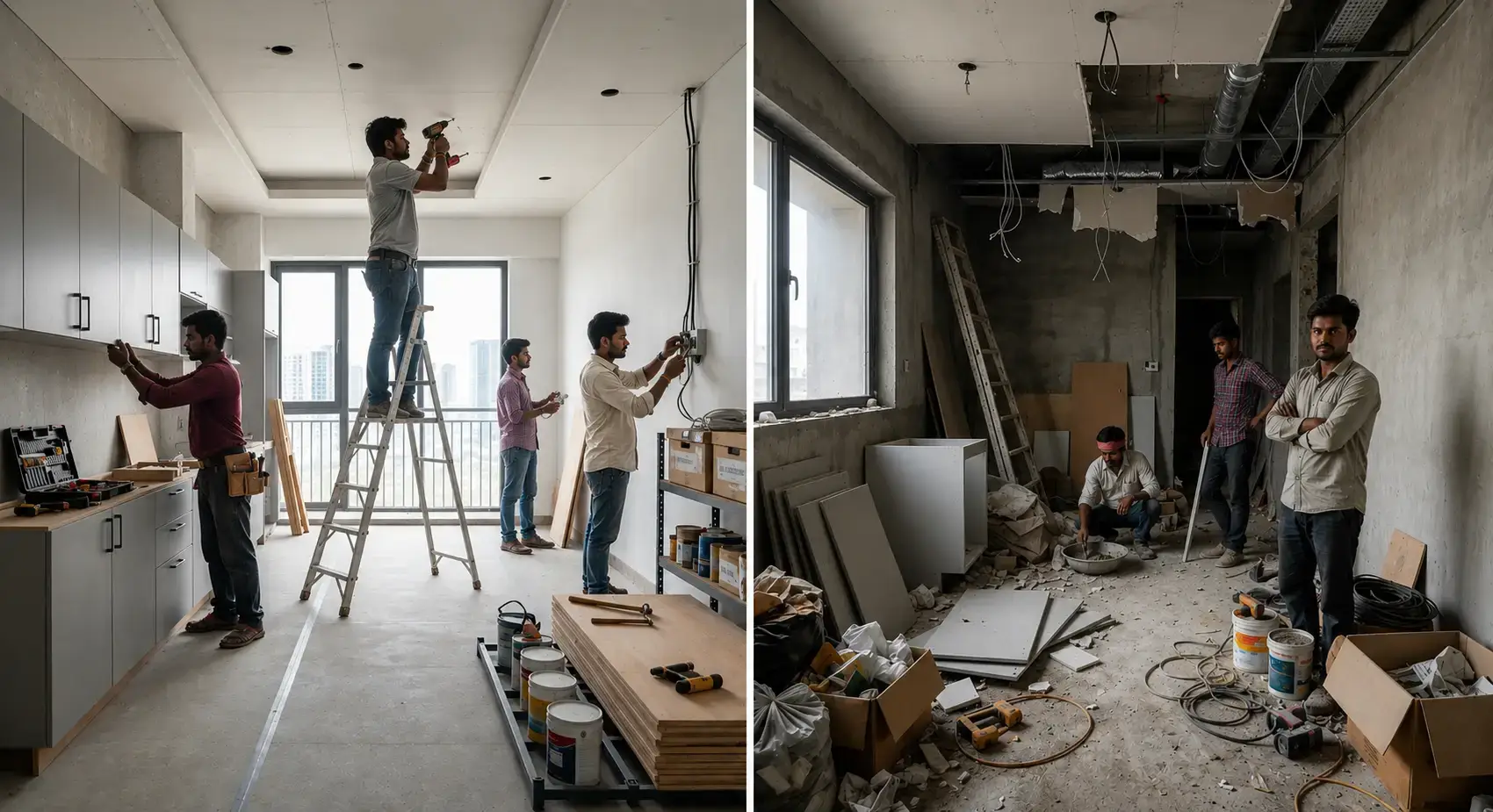
Modular vs Turnkey: Which Takes Longer?
Modular Interiors
Best for:
- faster execution
- budget-focused homes
- quicker move-in timelines
Typical timeline:
- 1BHK: 30–45 days
- 2BHK: 45–60 days
Full Turnkey Interiors
Usually take longer because they include:
- custom furniture
- electrical work
- false ceiling
- painting
- full coordination
Typical timeline:
- 1BHK: 60–75 days
- 2BHK: 75–120 days
If you're comparing project scope and execution stages, reviewing interior design packages in Navi Mumbai helps understand what’s usually included in each type of package.
Real Project Example from Navi Mumbai
In one recent 2BHK project, the expected timeline was around 60 days.
However, delays started after:
- wardrobe finishes were changed midway
- lighting positions were revised
- additional storage units were added later
The actual execution team remained the same.
The delay happened because decisions changed after work had already started.
After layouts and materials were finalized properly, the remaining execution moved much faster.
This is something we regularly see in apartment interiors.
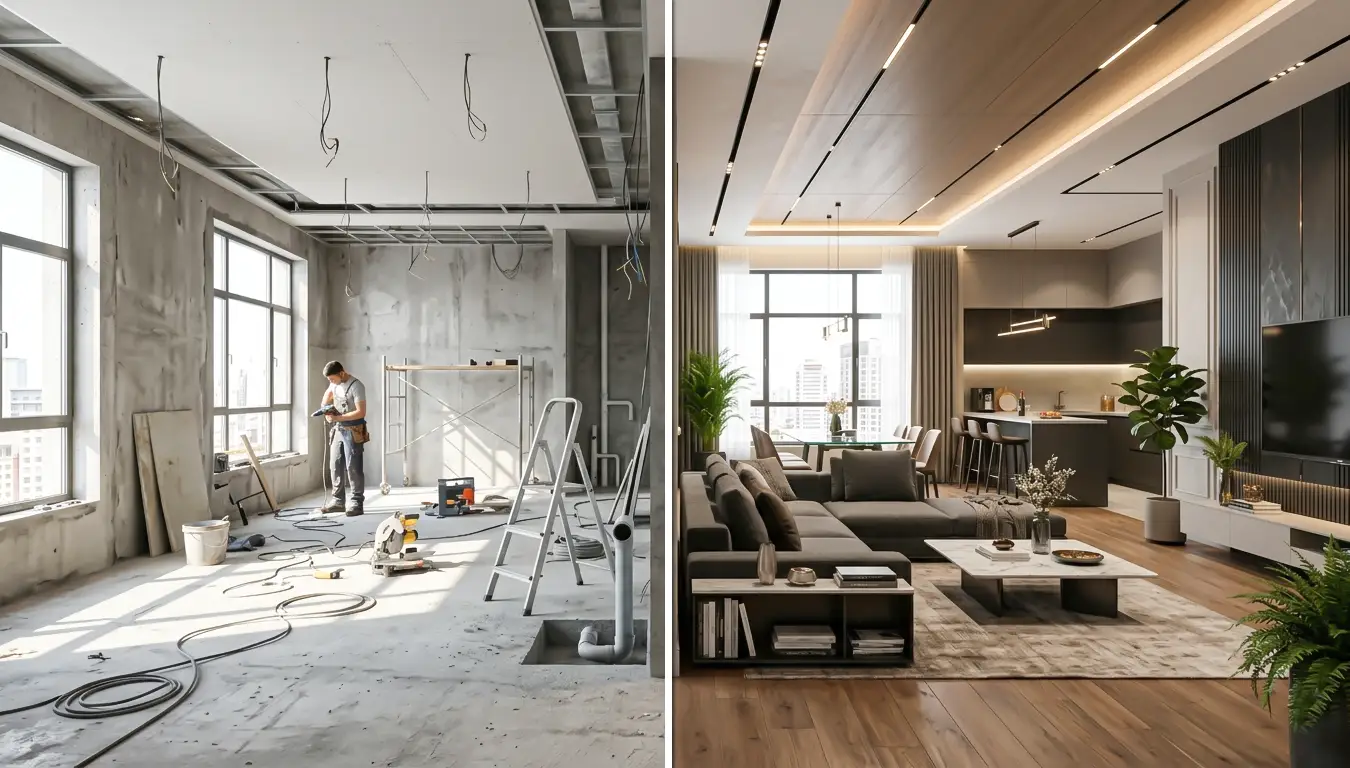
How to Finish Interiors Faster (Without Compromising Quality)
Projects become smoother when:
- ✔ layouts are finalized before execution
- ✔ materials are selected early
- ✔ electrical planning happens before carpentry
- ✔ storage requirements are discussed clearly
- ✔ one team manages execution properly
Fast interiors are possible.
But rushed interiors often create:
- poor finishing
- alignment issues
- future repair work
Good planning always saves more time than rushed execution.
Planning Your Home Interiors?
If you’re designing a 1BHK or 2BHK home, timeline planning should happen before execution starts, not during site work.
Many homeowners also explore complete home interior design services in Navi Mumbai to understand realistic timelines, layouts, and execution planning together.
Final Thoughts
Interior design timelines depend more on planning than speed.
Most delays happen because:
- layouts change midway
- materials are finalized late
- execution starts too early
When decisions are finalized properly from the beginning, interiors become smoother, faster, and far less stressful.
And in compact modern apartments, proper planning matters more than rushing the work.

 Living Room Interiors
 Design & Developed By