How to Choose the Right Interior Designer for Your Home (2026 Guide)
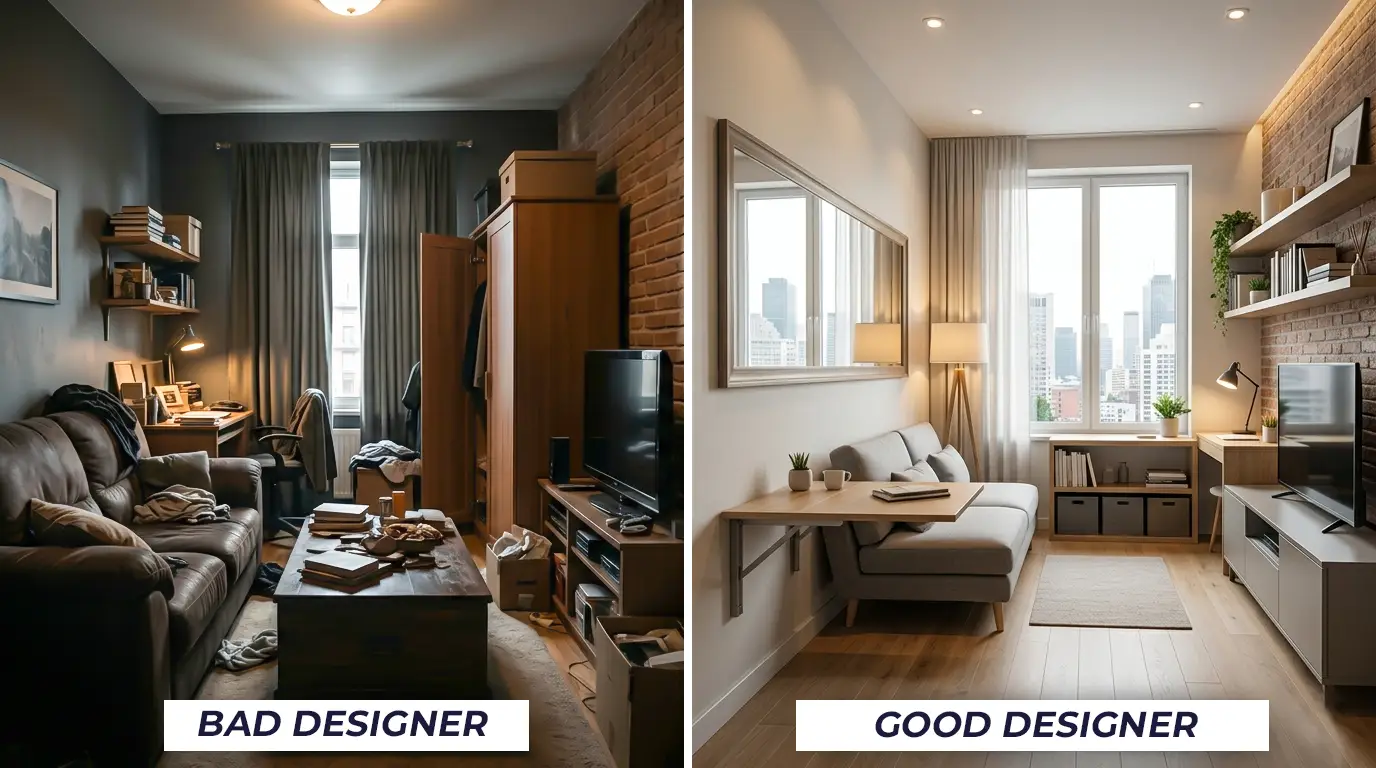
Choosing an interior designer is not just about finding someone who can “make your home look good.”
It’s about choosing someone who can:
- understand your lifestyle
- plan your space properly
- manage execution without chaos
In cities like Navi Mumbai, where most homes are compact 1BHK and 2BHK flats, the wrong designer doesn’t just affect design… it affects space, budget, and daily comfort.
In real Navi Mumbai projects, we’ve seen homeowners overspend ₹2–5 lakhs, end up with poor layouts, and face execution delays mostly due to choosing the wrong designer.
This guide will help you avoid that.

Why Choosing the Right Interior Designer Matters
A good interior designer doesn’t just design, they plan, coordinate, and optimize your entire home.
They help with:
- ✔ space planning
- ✔ furniture layout
- ✔ lighting design
- ✔ material selection
- ✔ execution coordination
In simple words:
Right designer = smooth project
Wrong designer = stress + rework
Step 1: Be Clear About Your Needs (Most People Skip This)
Before contacting any designer, ask yourself:
Do you need:
- full home interiors or just kitchen/wardrobes?
- a fixed budget range?
- modular, custom, or hybrid interiors?
Many homeowners approach designers without clarity and end up following suggestions that don’t suit their needs.
You can also compare modular vs custom interiors for 1BHK & 2BHK homes to decide what suits your home better.
Real Insight: Clients who come with clarity save 15–20% cost because decisions are faster and more focused.Step 2: Check Real Work, Not Just 3D Designs
Common mistake:
- trusting Instagram renders
- judging based on 3D designs
Reality:
3D designs look perfect. Execution doesn’t always match.
What to check:
- real project photos
- before-after transformations
- site videos
Always ask:
“Can I see your actual completed work?”
Step 3: Match Design Style With Your Home
Not every designer fits every home.
Example:
- Some specialize in luxury villas
- Some specialize in compact flats
If you have a 1BHK:
You need space optimization, not heavy luxury styling
Choose someone who:
- understands small spaces
- designs for real usage
Step 4: Understand Pricing Clearly (Avoid Hidden Costs)
Interior pricing is where most homeowners get confused.
Designers may charge:
- per sq ft
- lump sum
- percentage basis
Hidden costs often include:
- electrical work
- delivery charges
- GST
- loose furniture
Always ask for:
BOQ (Bill of Quantities)
For better clarity, refer to interior design packages in Navi Mumbai before finalizing.
Step 5: Don’t Choose Based on Lowest Quote
Cheaper quote usually means:
- lower material quality
- poor execution
- hidden costs later
Real Scenario:
Clients choosing the lowest quote often end up paying 20–30% more later.
Compare:
- materials
- scope
- execution quality
Not just price
Step 6: Check Execution Capability (VERY Important)
Some designers only design.
Some handle full execution.
Ask clearly:
- Who will manage site work?
- Who will coordinate vendors?
- What is the timeline?
Because:
Design without execution = incomplete project
Step 7: Communication Matters More Than Design
From real homeowner experiences:
“Communication and understanding your style matters as much as design.”
If a designer:
- doesn’t listen
- pushes their ideas
- ignores your lifestyle
You’ll face issues later.
Choose someone who:
- asks questions
- understands your routine
- adapts design accordingly
Step 8: Ask These Questions Before Finalizing
Don’t skip this.
Ask:
- What is included in the package?
- What is excluded?
- What materials will be used?
- What is the timeline?
- What happens if delays occur?
These questions prevent 80% of future issues.
Real Case Study (Navi Mumbai 2BHK)
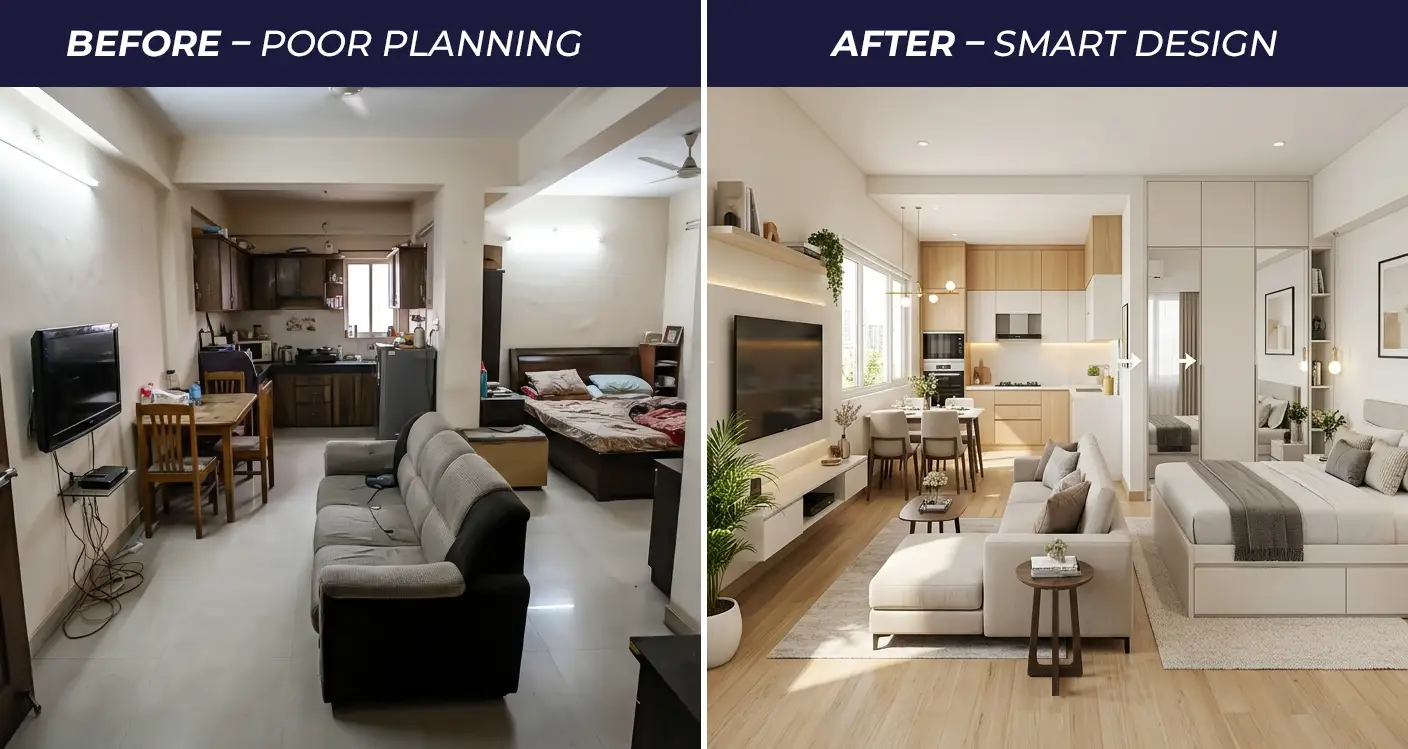
A client approached us after a bad experience:
- hired designer based on low price
- got poor layout
- no storage planning
We redesigned:
- furniture layout
- lighting plan
- storage system
Result:
- space felt bigger
- better usability
- no rework later
In most Navi Mumbai projects we handle, homeowners who choose designers based on clarity and execution experience face fewer delays, lower rework costs, and better long-term results.
Common Mistakes While Choosing Interior Designers
- Choosing based on price only
- Not checking real work
- Ignoring execution capability
- No clear scope discussion
- Following trends blindly
These mistakes cost lakhs.
How to Choose the RIGHT Interior Designer (Quick Checklist)
Before finalizing, ensure:
- Portfolio matches your home type
- Pricing is transparent
- Execution included
- Communication is clear
- BOQ provided
- imeline defined
If these are clear, you’re safe.
Planning Your Home Interiors?
Still confused which designer is right for your home?
Get a personalized consultation based on:
- your flat layout
- your budget
- your lifestyle
Final Thoughts
Choosing the right interior designer is not about finding the “best designer.”
It’s about finding the right fit for your home.
Because:
- every home is different
- every lifestyle is different
When chosen correctly:
- your home looks better
- functions better
- stays relevant longer
If you're planning execution, explore home interior design services in Navi Mumbai for complete design + execution support.

 Living Room Interiors
 Design & Developed By