Pooja Mandir for Home: Modern Wooden & Marble Designs
A pooja mandir does not need an entire room to feel special. In many modern Indian homes, a thoughtfully planned corner, a wall-mounted unit or a compact cabinet can create a dedicated place for prayer without taking away valuable living space.
The challenge is choosing a design that suits your home, accommodates the way your family worships and fits naturally into the interiors. From a traditional wooden temple for home to a contemporary marble backdrop, the right choice depends on more than appearance.
Here are practical pooja mandir designs for home to consider before deciding on the material, layout and finish.
Modern Pooja Mandir Designs for Home
The best mandir design is one that fits the available space and your daily routine. These options work for different home layouts.
1. Wall-Mounted Mandir
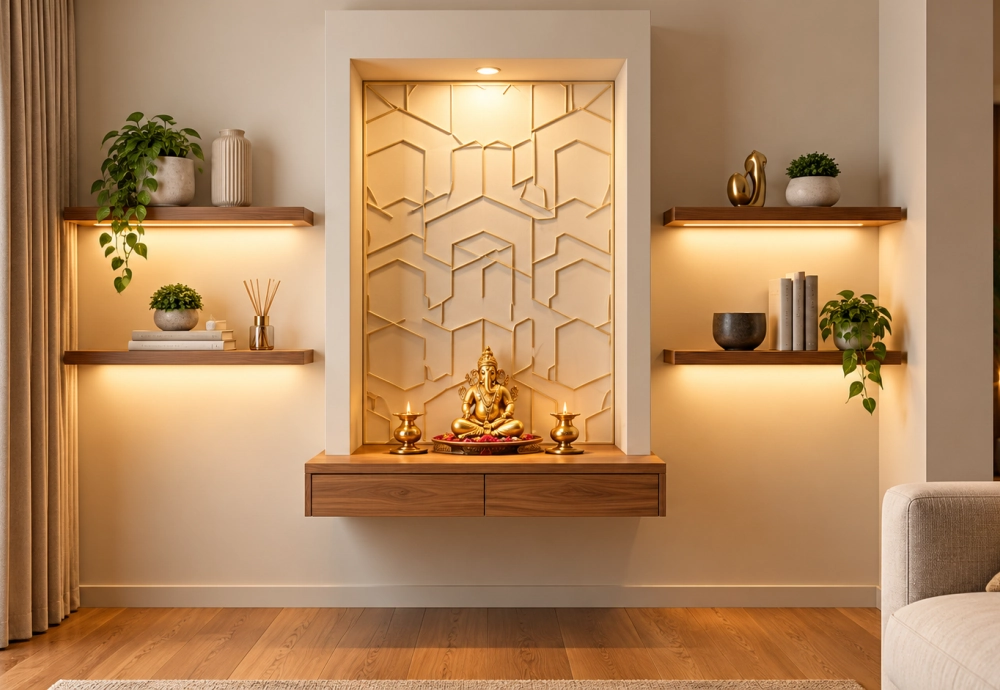
A wall-mounted pooja mandir is useful when floor space is limited. It can include a compact prayer shelf, a decorative back panel and a small drawer for incense, prayer books and other essentials.
Choose a design with enough depth for the idols and items your family uses. Check the wall's suitability and the required fixing support before installation, particularly for heavier units.
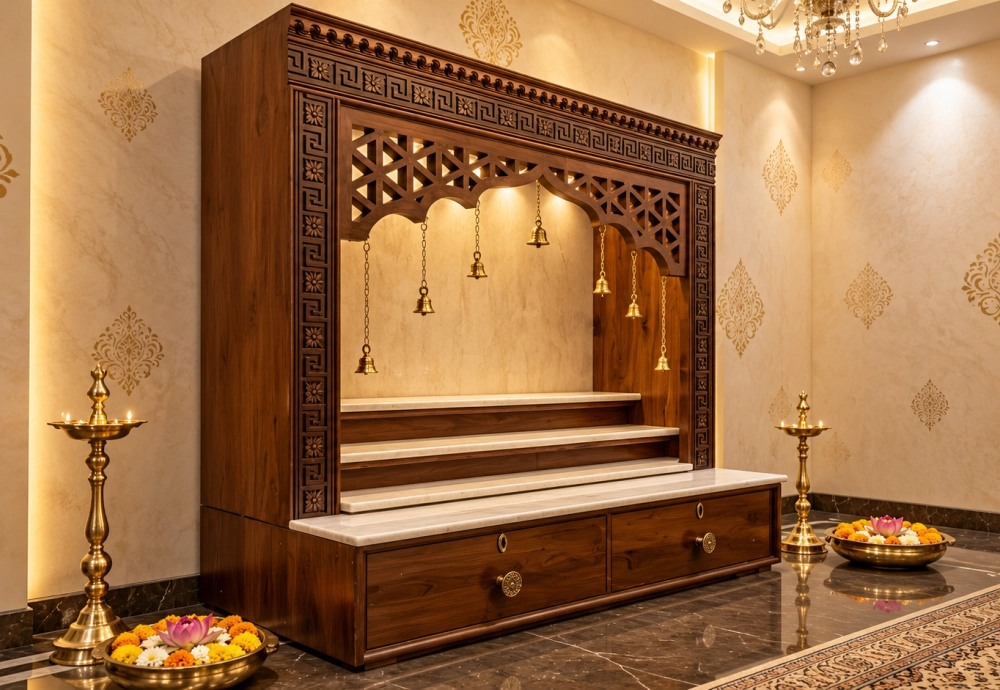
2. Wooden Mandir with Jaali Panels
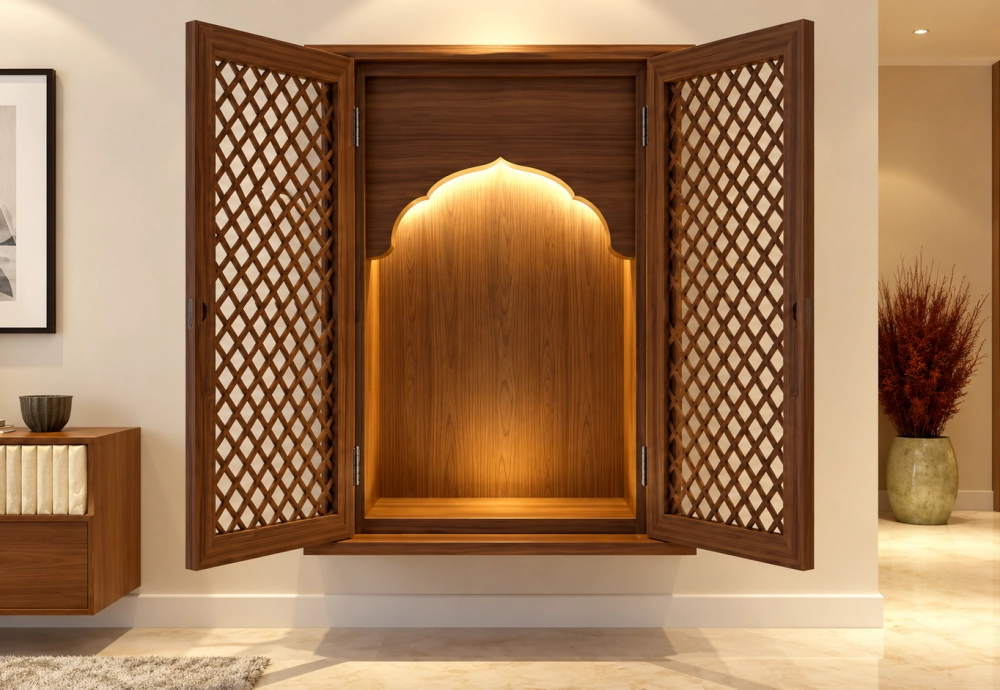
A wooden mandir with carved or CNC-cut jaali detailing creates a traditional look without requiring elaborate decoration throughout the room.
A backlit panel can highlight the design, while a simple wood finish helps it blend with nearby furniture. Keep the detailing proportionate to the available wall space; an oversized frame can make a compact living room feel crowded.
3. Mandir in a Wall Niche
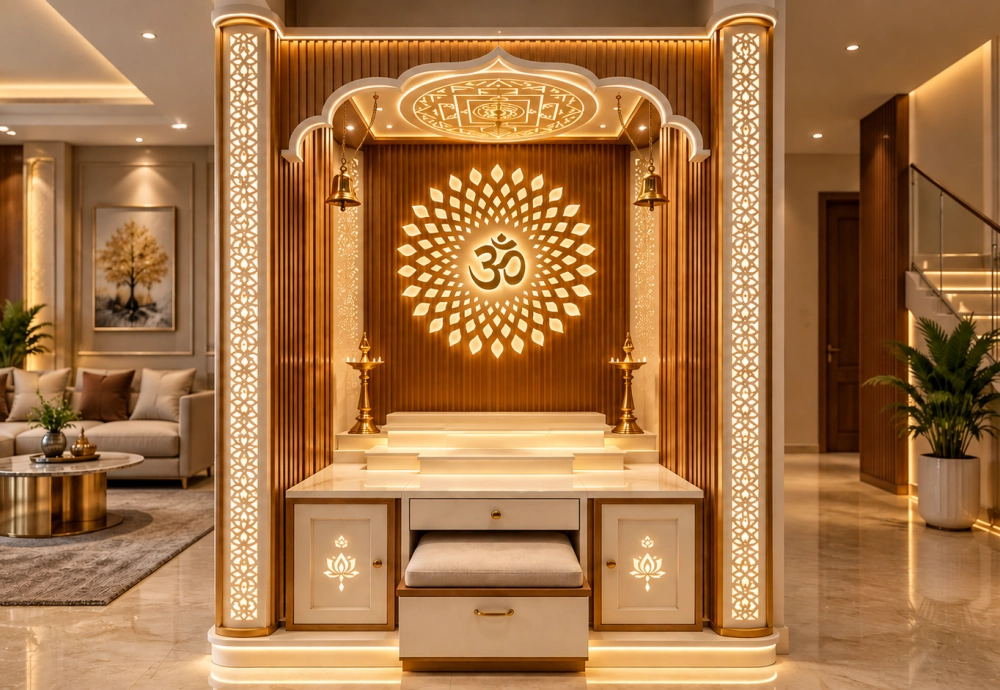
If your flat already has a suitable niche, it may be possible to convert it into a dedicated pooja space.
The niche can be finished with a contrasting panel, subtle lighting and a shelf or compact cabinet. Measure the depth carefully before selecting the idols and accessories so that everything fits comfortably.
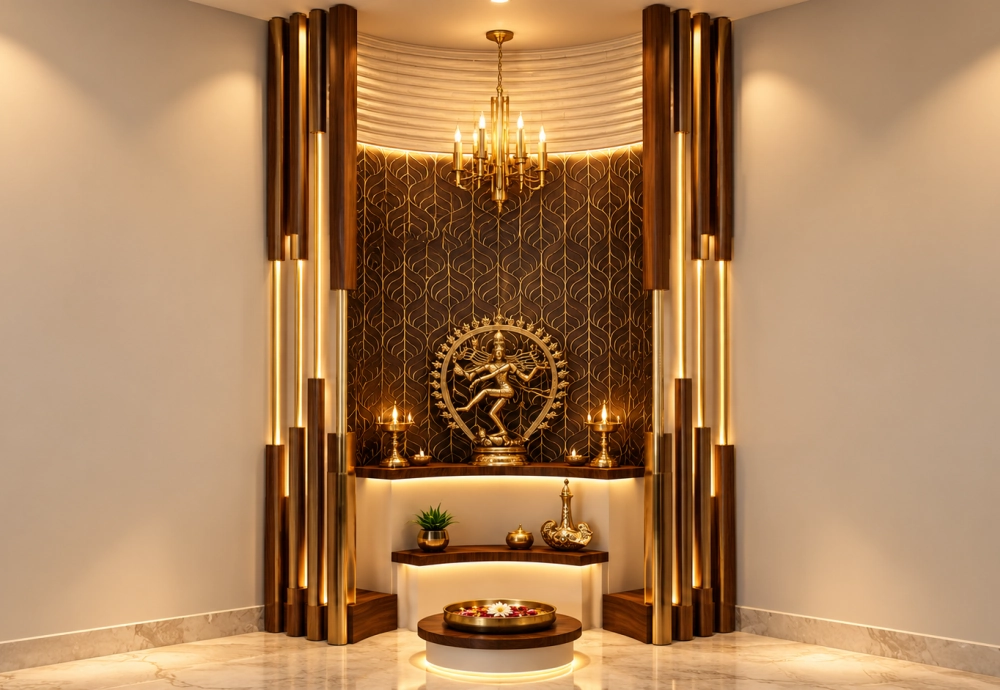
4. Corner Pooja Unit
An unused corner can accommodate a compact mandir with shelves or a narrow storage cabinet. This can work well in apartments where a separate prayer room is not practical.
Keep the approach clear and ensure the location has adequate lighting and ventilation. The mandir should feel accessible rather than squeezed between furniture.
Wooden Temple for Home: Is It the Right Choice?
Wood is a popular choice because it can suit traditional, contemporary and minimalist interiors.
A wooden temple for home can be designed with open shelves, carved doors, jaali panels or a simple box-style cabinet. Laminates and other finishes also provide flexibility when matching the unit to existing furniture.
Before choosing a wooden mandir, consider:
Finish:
Select a finish that complements the room rather than automatically matching every wooden surface.
Storage:
Plan space for prayer books, incense, lamps and other regularly used items.
Maintenance:
Choose a finish that is practical to clean and maintain.
Lighting:
Concealed lighting can highlight the backdrop, but wiring should be planned safely.
Placement:
Keep the unit away from excessive moisture and direct heat.
For a modern apartment, a simple wooden cabinet with a defined prayer shelf often creates a cleaner look than a heavily decorated structure.
Marble Temple for Home: Traditional or Contemporary?
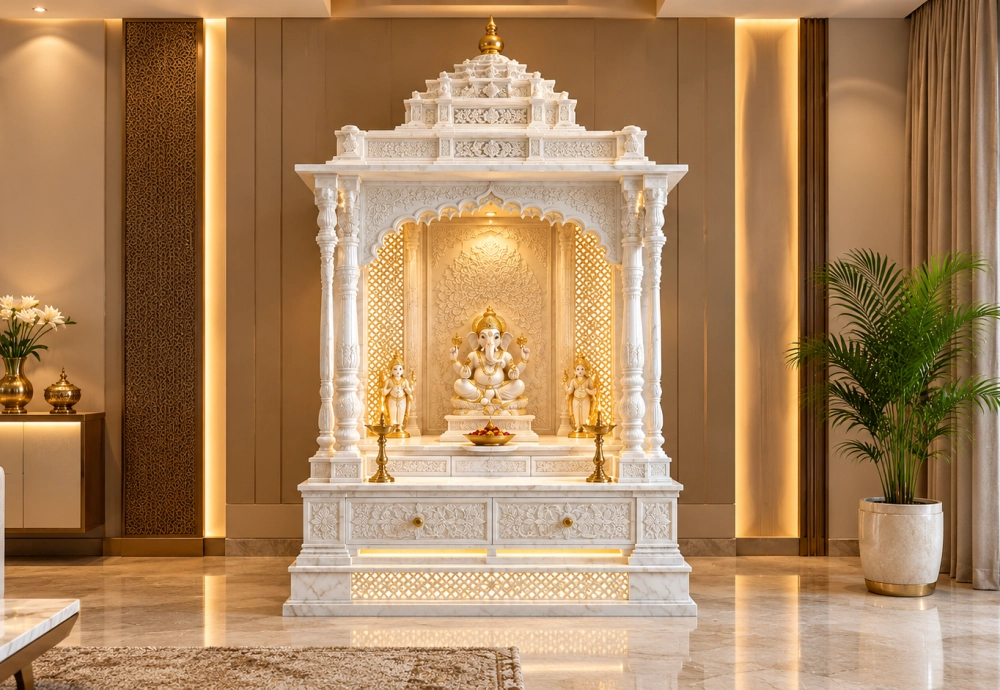
A marble temple for home can create a bright, elegant and traditional focal point. White marble, light stone finishes and subtle detailing can also complement contemporary interiors.
However, the material should be selected according to the installation and maintenance requirements, not just its appearance.
Consider the following before finalising a marble design:
Weight and support:
A substantial marble unit needs a suitable floor or structural support. Do not assume an ordinary wall can carry a heavy installation.
Cleaning:
Ask how the selected stone should be cleaned and whether it needs sealing or other care.
Design detailing:
Carved arches and pillars create a traditional look, while straight lines and minimal borders feel more contemporary.
Space:
A freestanding marble temple generally needs more floor area than a compact wall-mounted unit.
If you want the appearance of marble without a heavy stone structure, a marble-finish panel or suitable decorative surface may be worth considering.
Pooja Mandir with Doors: A Practical Choice for Flats
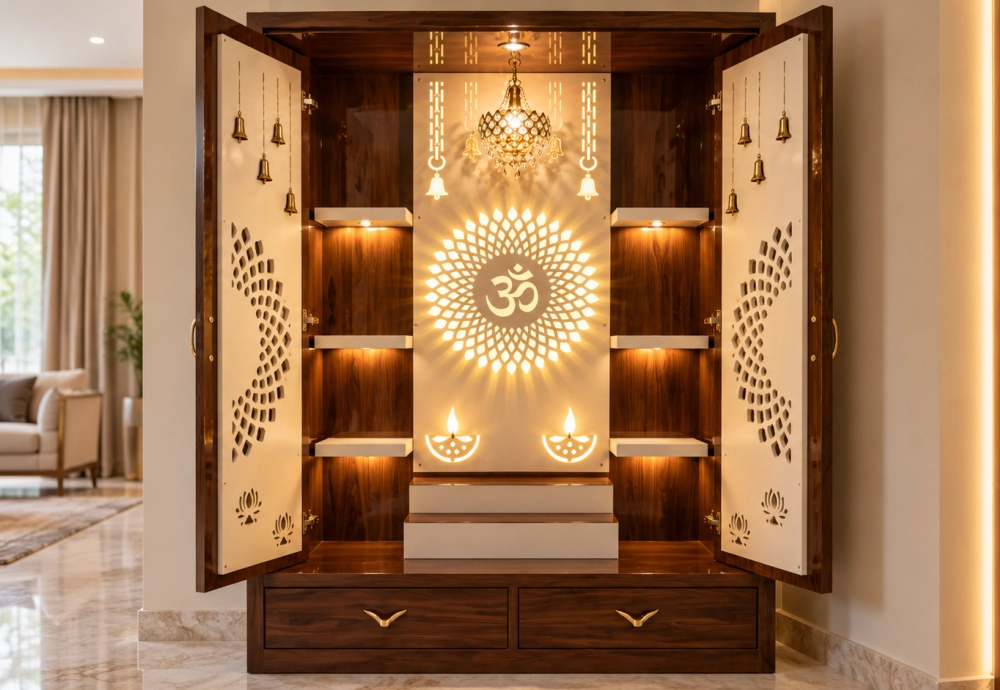
A pooja mandir with doors is useful for families who prefer to close the unit when it is not in use or keep prayer accessories out of sight.
The choice of doors affects both the appearance and everyday usability.
Hinged doors
Offer a traditional cabinet-like appearance but need clear opening space.
Sliding doors
Can work where nearby furniture leaves limited clearance, although the track and opening arrangement need to be planned carefully.
Jaali doors
Allow visual detail and partial openness.
Glass-panel doors
Can make a cabinet look lighter.
The suitability of each option depends on the design and how the mandir will be used.
Before selecting a closed unit, check that the interior has enough space for the idols and accessories. Also consider ventilation and safe placement if your family regularly lights a diya or incense. Keep open flames away from wood, curtains and other combustible materials.
How to Plan a Mandir in a Small 1BHK or 2BHK Flat
In a compact home, the location often matters more than the size of the mandir.
Start by identifying a spot that feels appropriate for your family's prayer routine and does not obstruct movement through the room. A living-room niche, a suitable wall or an underused corner may offer a practical solution.
A few planning details make a difference:
Measure first:
Note the available width, height and depth before selecting a ready-made or custom unit.
Plan storage vertically:
Shelves or a compact cabinet can keep accessories organised without spreading across nearby furniture.
Avoid visual clutter:
One well-designed backdrop is often enough; too many decorative panels, lights and finishes can compete with one another.
Plan electrical points early:
If you want integrated lighting, decide the wiring route before the unit is installed.
Coordinate nearby furniture:
Ensure the mandir does not interfere with doors, passageways or the use of a TV unit and other living-room furniture.
If you are planning the surrounding space too, our living room interior design ideas for 1BHK and 2BHK homes can help you think about how the prayer corner fits into the overall layout.
What Should You Decide Before Installing a Pooja Mandir?
Before finalising the design, answer these questions:
- ✓ Will the mandir be wall-mounted, built into a niche or placed on the floor?
- ✓ How many idols and prayer accessories need to fit inside?
- ✓ Do you prefer wood, a marble structure or a marble-look finish?
- ✓ Will the unit have open shelves or doors?
- ✓ Does the installation need additional electrical work or structural support?
- ✓ How will the unit be cleaned and maintained?
These decisions help you avoid choosing a beautiful design that later proves inconvenient to use.
If the mandir is part of a wider home makeover, it is also worth coordinating its finish, storage and placement with the rest of the room. You can explore our residential interior design services in Mumbai and Navi Mumbai when planning the broader home layout.
Final Thoughts
A well-planned pooja mandir should suit your home as comfortably as it suits your family's prayer routine. Whether you choose a wooden temple, a marble design, a wall-mounted unit or a cabinet with doors, prioritise suitable dimensions, safe installation, practical storage and easy maintenance.
For homeowners in Navi Mumbai, the aim is not to fit the biggest mandir into the available space. It is to create a dedicated, thoughtfully planned corner that feels natural within the home.
Design requirements and installation needs vary by home, material and site conditions. Check structural support and electrical safety before installation, especially for heavy units or designs with integrated lighting.
Planning interiors for your Navi Mumbai home?

 Living Room Interiors
 Design & Developed By